Subscribe→
1995The web
2007iPhone
2020GPT-3
2022ChatGPT
Chegg loses 99%
Meta lays off 33,000
2026Now

Why Saturday Robot Exists

AI is changing faster than job titles can keep up. I'm sharing stories from growing unicorn startups and from everyday builders struggling with the same challenges, so you don't have to navigate this alone.

Jason Gong

Jason Gong · April 29, 2026

About the author

Jason Gong here. Saturday Robot ships each week with what the most serious AI builders are actually doing. Before working on this and doing fractional growth work, I ran growth at Kite, an AI coding assistant from before ChatGPT (7M users, acquired by Affirm), founded Firezone (YC W22), and led GTM at GrowthX, where we built AI growth machines for companies like Lovable, Webflow, and Surge AI ($12M in 9 months).

This February, my tokens cost more than a headcount for the first time. About $5,000 in a single month.1

It sounds like a lot until you look at what the month contained. I spent more time in Claude Code and Codex than in any of the tools that used to define my job. I wrote strategy in markdown. I reviewed copy in pull requests. Agents sent emails, wrote blog posts, created models, and set strategy. The people around me were doing work that nothing in their job titles would have predicted.

The work is changing faster than job titles. That is the piece that has been sitting with me, and I think a lot of people recognize the feeling without being sure what to do with it.

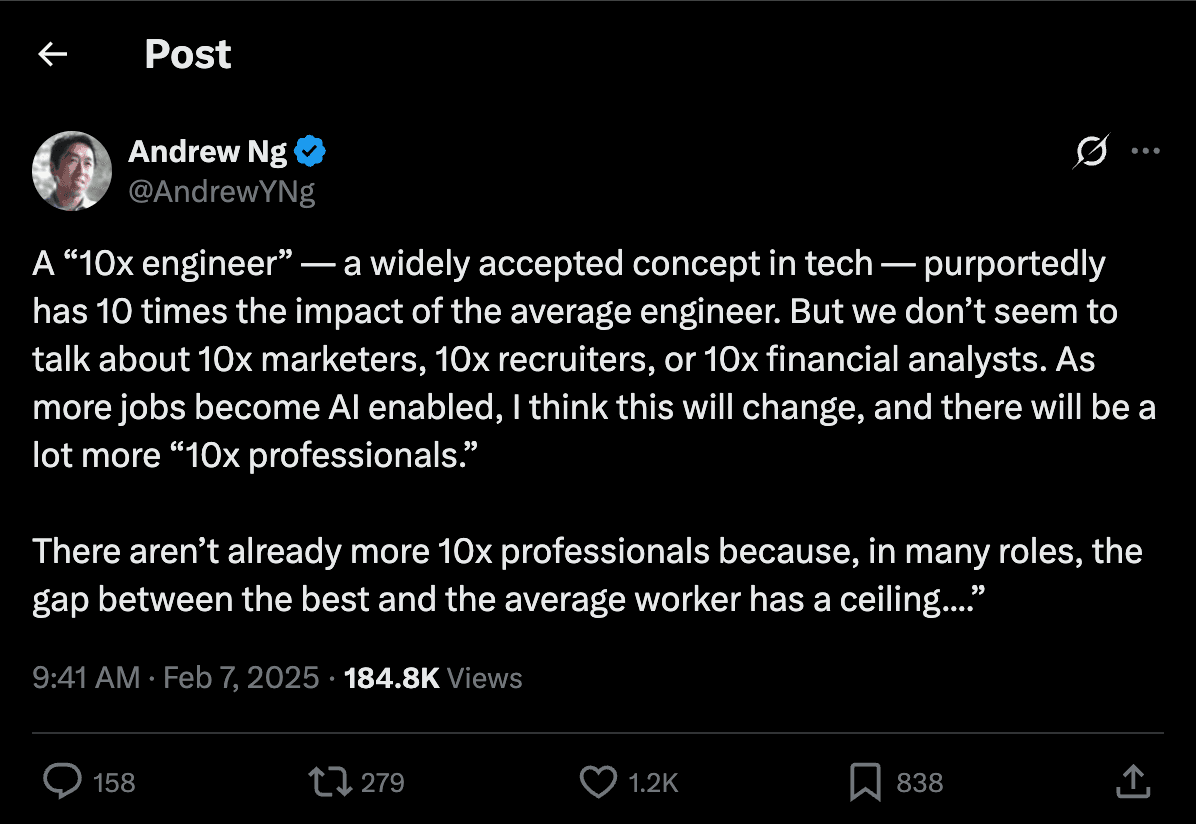
Screenshot of Andrew Ng's X post about 10x marketers, recruiters, and financial analysts
Andrew Ng argues marketers, recruiters, and financial analysts are next for the 10x productivity jump engineers already had. X, February 7, 2025.

Coding's head start: code was already canonical, public, artifact-leaving

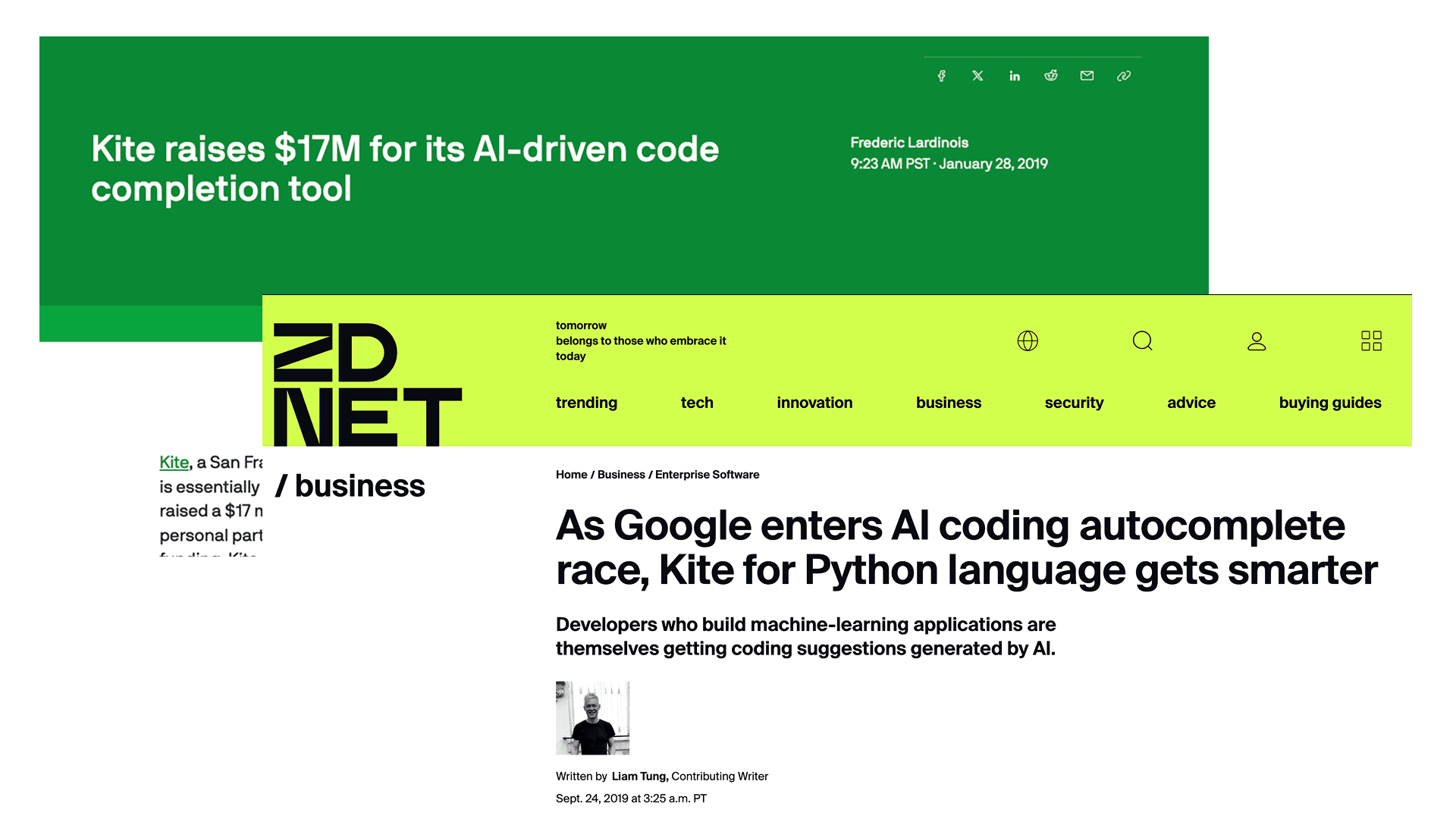
Almost eight years ago I was head of growth at Kite, an AI coding assistant that existed long before ChatGPT.2 The models back then could autocomplete and hint but not really reason with you. We charged for tokens before most people knew what a token was.
Kite growth chart showing more than 500,000 monthly active developers.
Kite's user growth as an AI coding assistant built years before ChatGPT. We reached 7M+ users before being acquired by Affirm in 2022.

What the Kite era made obvious in hindsight is that software absorbed AI fast because the substrate was already right. Engineers had spent decades putting their work into text. Code was canonical. Documentation mattered. Pull requests were public. Mistakes left a record. Once the models got good enough to reason, those habits started doing real work.

Marketing was the opposite. Strategy lived in decks that went stale. Positioning was a paragraph somebody remembered from an offsite. Playbooks were PDFs nobody opened. The work left almost no durable artifact a model could read.

The same shift is now happening in other functions

Last year at GrowthX I built a go-to-market team where three of four people had never opened a terminal. By the end of the year they were working out of a shared repo. Copy got reviewed in diffs. Playbooks lived alongside the deliverables they produced. One junior hire who had been writing in Google Docs six months earlier shipped a full positioning rewrite as a PR with suggested commits from three different reviewers. He kept asking me if that was normal.

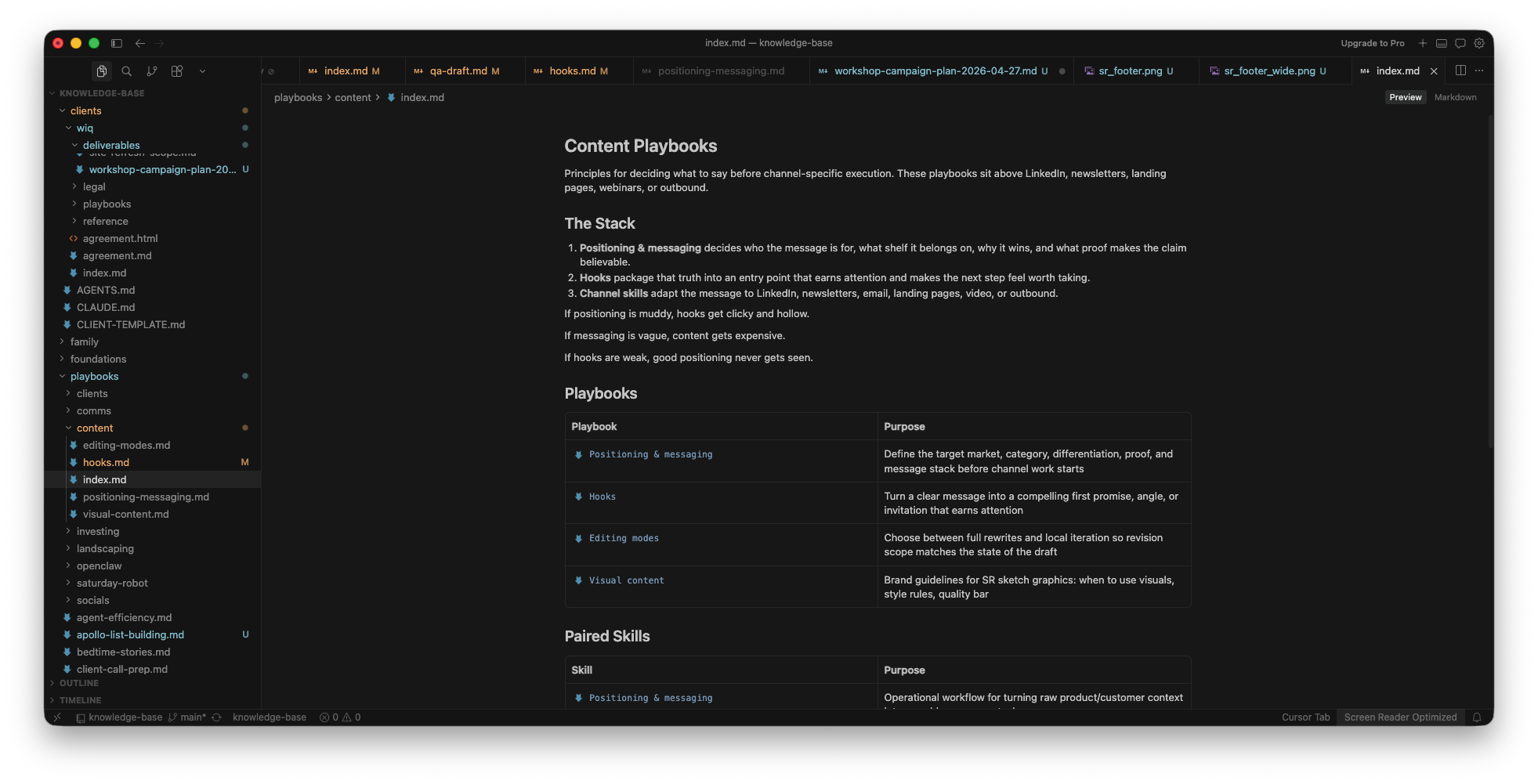
No more google docs or notion. Its cursor, tmux, claude code.

The compounding showed up fast. A positioning doc sharpened a landing page. The landing page improved an outreach sequence. The sequence surfaced a new objection, which updated the positioning. The repo stopped feeling like storage and started feeling like infrastructure. Revenue across those engagements grew roughly 7x over the year.3

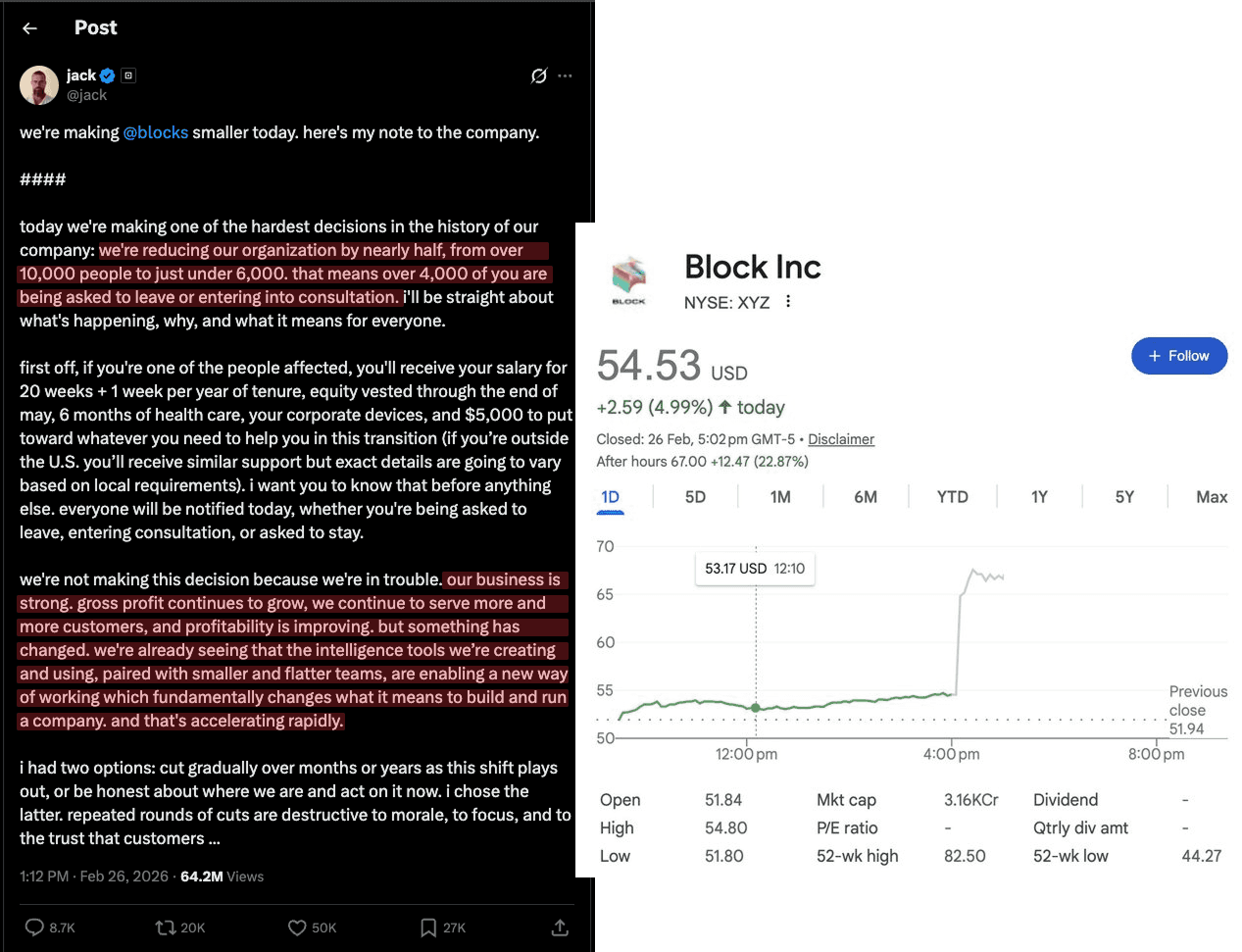
When Block cut roughly 4,000 people this February, Jack Dorsey wrote that intelligence tools paired with smaller and flatter teams were changing what it means to run a company.4 Every layoff is not downstream of AI. But the market has the incentive to tell that story, and stories like that harden into strategy before the technology catches up.

Composite image showing Jack Dorsey's February 26, 2026 X post about Block reducing its workforce and a stock chart showing Block shares rising that day.
Jack Dorsey cuts roughly 4,000 people at Block, cites AI and smaller teams, and the stock shoots up the same day. X, February 26, 2026.

Why write about this?

The best thinking I have found on any of this is from practitioners who write as they go. Paul Graham on how writing is thinking.5 Simon Willison shipping a tool and posting about it the same week.6 Ben Thompson naming the structural force underneath an earnings call.7 Most AI coverage is a 101 explainer or a 2030 prediction. The middle, where you decide what to try on Monday, is thin.

I ran monthly workshops with thousands of registrants this past year to teach people how to use AI in content marketing. The people who ramped fastest all had some version of a shared system underneath them. The people still stuck were running the same prompt-per-task loop they had been running six months earlier. Nobody had shown them what the setup should look like once it was working.

The promise: have something to try Monday

Here is my promise with Saturday Robot. Every post will be about the work itself. How a thing got done, what made it hard, what broke, what I am still figuring out. Mostly my own field reports, sometimes people whose setups taught me something. If I do not have something substantial to say, the piece will be short. If I do, I will go deep. Either way, by the end you should have one concrete thing you can try in your own work that week.

This post is no exception. Alongside it I am launching a starter kit for a knowledge base you can run agents on top of.8 Templates and examples you can copy and have running in an afternoon. By Monday you can have your first agent reading your own work.

Saturday is when you build what you want. The robot is the thing you are building. Something that did not exist on Friday and works by Sunday.

If any of the feeling I started with sounds like your last year, I think you are in the right place.

A note: the starter kit goes live Monday, May 11. The site is still rough in a few spots. I am fixing things as I go.

Field notes on growth from the best operators

Companies with unfair distribution win. I help unpack what top operators are learning and investing in to help you think through growth.

Appendix

  1. 1.On “my tokens cost more than a headcount”: this was my combined Claude API and related model spend across one calendar month of production agent workflows, advisory client engagements, and personal experimentation. Headcount here means a junior contractor or freelancer monthly rate, not a full-time senior hire. The point of the line is not that $5,000 is a lot or a little, but that the ratio has flipped: I now reach for a token before I reach for another person on many tasks I would have delegated a year ago.
  2. 2.Kite was one of the first AI coding assistants. I was head of growth there from roughly 2018 onward. We launched in 2019, grew to 7M+ users, won roughly 5% of Stack Overflow’s daily traffic with a documentation site, and hacked our way to the top of the VS Code marketplace. I built a YouTube channel to 40,000 subscribers in three months to drive adoption. The AI back then ran on GPT-2 era models. Good enough to predict the next token in a line of code, not good enough to understand what you were building. Kite was acquired by Affirm in 2022.Kite on TechCrunch·Kite post-mortem
  3. 3.GrowthX is the agency where I led go-to-market and built the team described in the essay. We ran the GTM engine for Lovable, Webflow, Surge AI, Augment Code, Abnormal Security, and Udemy among others. For Surge AI specifically we generated about $12M in revenue across nine months. Revenue across the engagements grew roughly 7x over the year. The non-engineer pull request story is from that team.
  4. 4.In February 2026, Block cut roughly 4,000 people. Jack Dorsey published an internal memo the same week about intelligence tools paired with smaller and flatter teams changing what it means to build and run a company. The memo is the source of the Dorsey line in the essay.
  5. 5.Paul Graham’s essays are the clearest example I know of someone writing to figure out what they think, and then sharing the result. Start wherever. The ones on writing itself, on startup economics, and on how ideas propagate shaped a lot of what I believe about making work legible in public.Paul Graham — Essays
  6. 6.Simon Willison is a co-creator of Django and the maintainer of Datasette and the LLM CLI tool. He ships weekly and blogs about what he just shipped. If you want a working model of what learning AI in public looks like, read his archive from the last year.simonwillison.net·Datasette·LLM CLI
  7. 7.Ben Thompson’s Stratechery is where I learned to look past headline numbers to the structural force underneath a business. His framing of Aggregation Theory and his daily analysis of platform dynamics are foundational. His recent interview series with operators (the Nico Rosberg piece is a good example) is also a masterclass in eliciting specific detail rather than generalities.Stratechery
  8. 8.The starter kit launches Monday, April 27. A copyable GitHub-based knowledge base that works with Claude Code, Cursor, and most agent setups. The signup link will appear here once the kit is live.
  9. 9.Firezone is the open-source zero-trust access platform I founded. Part of Y Combinator’s Winter 2022 batch. Background for the byline credits.firezone.dev
  10. 10.Supplementary source on AI coding adoption. The 2022 Copilot productivity figure comes from GitHub’s controlled study of 95 developers writing an HTTP server in JavaScript. Developers using Copilot completed the task 55 percent faster than the control group. It was the first widely cited number that turned the AI coding case from anecdote into something measurable.GitHub: Research on developer productivity with Copilot
  11. 11.Supplementary source. The Stack Overflow 2025 Developer Survey corroborates that daily AI tool usage has become the norm among working developers.Stack Overflow 2025 AI Survey